Pickleball Is Just Physics Wearing Ugly Shorts
Okay, hear me out. I know the sport has a reputation. I know it sounds like something invented by a guy named Chad who got bored of golf. But underneath the neon paddles and the questionable court fashion, pickleball is genuinely one of the most physics-dense sports I’ve ever gotten obsessed with, and nobody talks about that part, so here I am, doing it myself.
Let’s start with the ball. It’s not a tennis ball, it’s not a wiffle ball, it’s this perforated plastic orb with holes drilled through it, and those holes aren’t decorative, they’re doing actual aerodynamic work. The holes reduce drag inconsistently depending on orientation, which is why the ball’s flight path can look almost drunk in the wind, and why a decent player can put spin on it that behaves nothing like spin on a tennis ball. Less mass, less compression, way more sensitivity to air resistance. You’re not hitting a ball so much as negotiating with it.
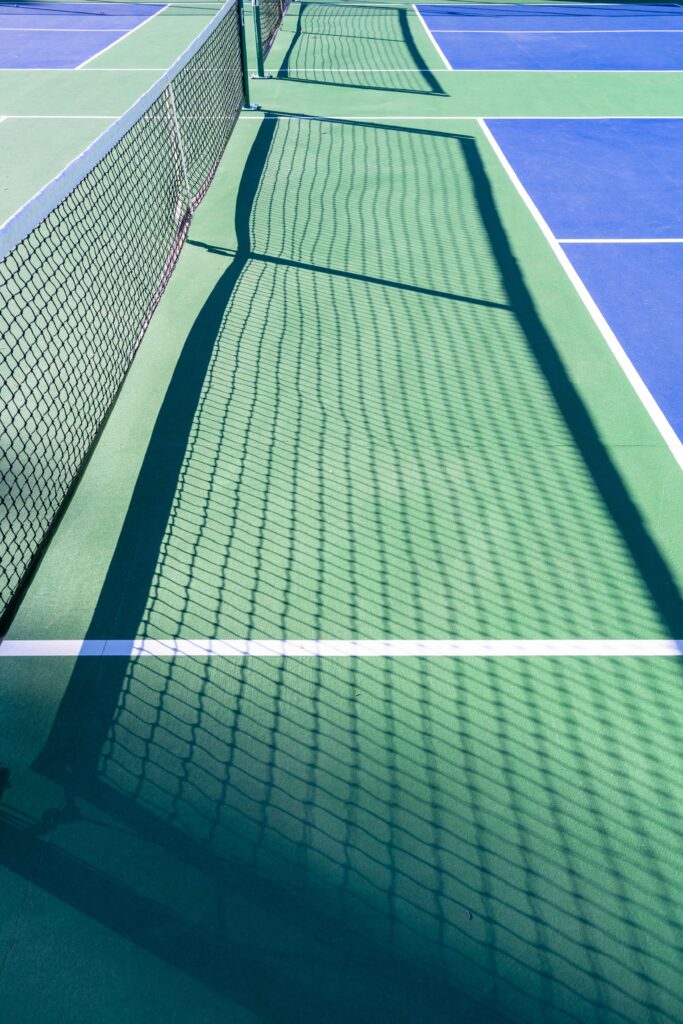
Then there’s the “kitchen,” the seven-foot no-volley zone on either side of the net, and this is where the sport actually gets interesting from a physics standpoint. Because the ball is light and drag-heavy, it decelerates fast, which means the entire strategy near the net collapses into this soft, controlled dinking war where players are managing energy transfer instead of trying to blast the thing past each other. You can’t power your way out of a kitchen exchange the way you can in tennis. The ball just won’t cooperate. It’s basically a lesson in restraint disguised as a sport, and I say this as someone with zero natural restraint.
The sound is its own scientific problem, and not a small one. That distinctive pop, the one that’s gotten pickleball banned from entire neighborhoods, comes from a hard paddle surface meeting a hard plastic ball, and it turns out that specific frequency range is uniquely awful for human ears to filter out as background noise. Acoustic engineers have actually studied this. It’s not that pickleball is loud, it’s that it’s the wrong kind of loud, the kind your brain refuses to ignore even from three blocks away. I find this deeply, personally validating every time someone tells me the noise complaints are overblown.
None of this science matters, though, if you can’t actually get on a court, and this is the least romantic part of the sport but somehow the part that ends up governing your whole week. Every facility near me runs through pickleball booking software now, and once you’re in that system, your life quietly reorganizes itself around available time slots. I didn’t choose to become a person who checks an app for court openings before checking my email. It just happened.
Anyway. The ball is weird, the kitchen is a battlefield of restraint, and the sound is scientifically engineered to ruin your neighbor’s Saturday mornings. Pickleball isn’t a joke sport. It’s a physics demonstration that occasionally involves scoring.